
Fraud, rising costs, new technology and growing payment complexity can make it harder to know what’s coming next. You don’t have to face those changes blindly.
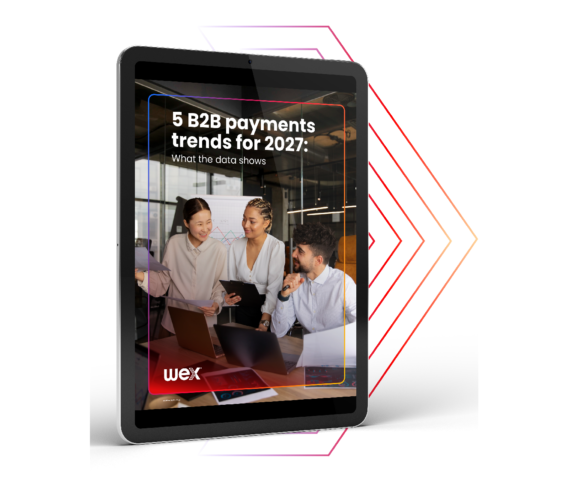
The WEX 2027 B2B Payments Trends Report brings together the data and insights you need to understand where business payments are headed and what those changes could mean for your organization.
Inside the report, you’ll discover:
How technology is changing who has a seat at the payment table
Explore the growing role of IT, integration and automation in payment decisions.
Why payment security needs to start earlier
See how faster, more connected payments are changing the way businesses approach fraud prevention.
What’s standing between AI adoption and AI readiness
Understand why successful AI adoption takes more than simply adding new technology.
How payments are becoming part of the infrastructure
Discover how embedded payments are changing the role businesses expect their payment providers to play.
Why simplifying your payment stack matters
See why businesses are taking a closer look at the number of providers, systems and integrations behind their payments.
Know what's changing. Know what to watch.
Download the report
Enter a valid email address — we'll send the report straight to your inbox.
"*" indicates required fields
Q&A
How can businesses use virtual cards for safer, more controlled payments?
Virtual cards provide a digital payment method that can be configured for specific purchases or suppliers. Instead of exposing a permanent card number, businesses can use transaction-specific credentials and establish rules around spending. This gives AP and finance teams more control over payments while improving visibility and creating opportunities to earn rebates.
What protections do virtual cards offer against payment fraud?
A virtual card can be created with parameters that limit its use, such as a specific dollar amount, merchant, or transaction. If the card details are exposed, those restrictions can limit their usefulness to a fraudster. This approach reduces reliance on static payment credentials and gives finance teams additional tools for monitoring and controlling spend.
Why do businesses consider checks a higher-risk payment method?
Traditional checks contain banking information that can be copied or manipulated, creating opportunities for fraudulent payments. When a check is compromised, the response can also take considerable time and effort. Businesses may need to investigate the transaction, place stop-payments, issue replacements, or make changes to affected bank accounts.
What percentage of U.S. organizations experienced payment fraud?
Payment fraud affected a large majority of U.S. organizations surveyed by AFP. Its 2026 Payments Fraud and Control Survey reports that 76% experienced attempted or actual payments fraud in 2025.
What determines how quickly suppliers can be enrolled in electronic payments?
There isn’t a standard timeline for supplier enablement. The process can depend on the number of suppliers, their preferred payment methods, and how quickly they respond to outreach. A supplier enablementteam can handle communications, answer supplier questions, and help move willing suppliers into the new payment process.
What happens when a supplier isn't ready to accept virtual cards?
Supplier acceptance isn’t always immediate. Businesses can start by identifying suppliers that are already equipped to accept virtual card payments, while using targeted education and follow-up to address questions or concerns from other suppliers. Over time, this approach can increase the number of suppliers receiving payments electronically.
How much does AP typically spend processing an invoice?
Invoice processing costs can add up quickly, particularly when AP teams rely on manual workflows. Ardent Partners’ 2025 Accounts Payable Metrics That Matter report found that the average organization spends $9.40 to process an invoice, compared with $2.78 among best-in-class organizations.